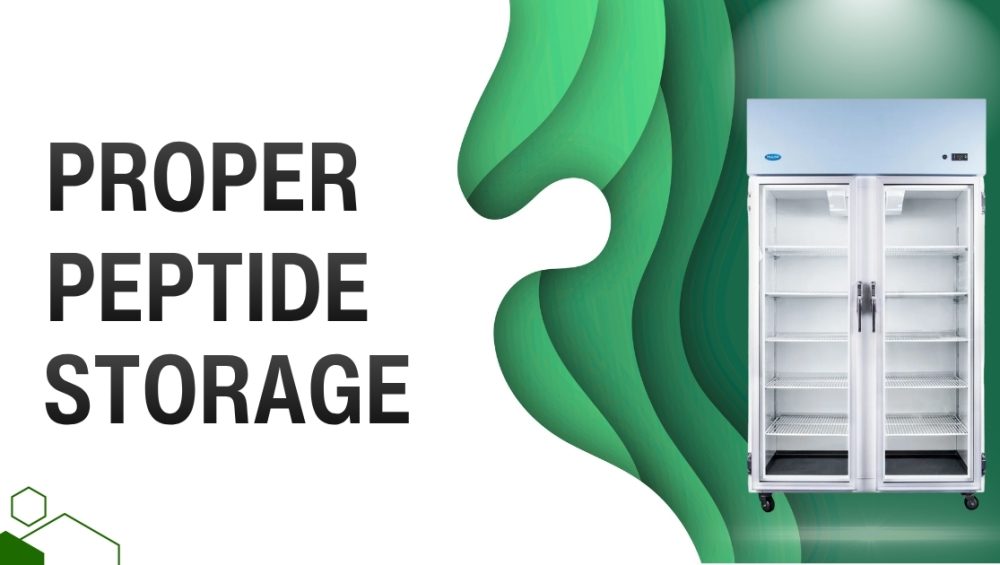
Peptides are fragile molecules. Improper storage can degrade them in days, turning an expensive research compound into inactive powder. This guide covers exactly how to store peptides before and after reconstitution.
Lyophilized (Dry) Peptides — Before Reconstitution
- Short-term (weeks): Store at 2–8°C (36–46°F) — a standard refrigerator is perfect.
- Long-term (months to years): Store at -20°C (-4°F) in a freezer. Avoid frost-free freezers that cycle temperature.
- Light exposure: Keep vials in their original box or wrap in foil. UV light degrades peptides.
- Moisture: Keep the vial sealed. Do not open until ready to reconstitute.
After Reconstitution — Mixed with Bacteriostatic Water
- Storage temperature: 2–8°C (refrigerator). Do NOT freeze reconstituted peptides — ice crystals damage the molecule.
- Shelf life after mixing: Most peptides remain stable for 2–4 weeks when refrigerated. Some (like BPC-157) may last longer; others (like IGF-1) degrade faster.
- Keep sterile: Always wipe the vial stopper with an alcohol swab before and after drawing. Use a new sterile syringe each time.
- Label your vials: Write the reconstitution date on each vial so you know when it expires.
Common Storage Mistakes
- Leaving peptides at room temperature: A peptide left on the counter overnight can lose 20–50% potency.
- Using tap water instead of bacteriostatic water: Tap water contains bacteria and minerals that destroy peptides.
- Shaking the vial: Peptides are delicate. Shaking causes foaming and denatures the protein chains. Gently swirl to mix.
- Storing in the fridge door: The door experiences temperature fluctuations every time it is opened. Store peptides in the main compartment.
When you order peptides from SteroidesLab, they ship with cold-chain packaging to maintain stability during transit. Once received, follow the guidelines above for maximum shelf life.
Categories: